
Martin MS110 1 9/16 Super Series Jaw Coupling.
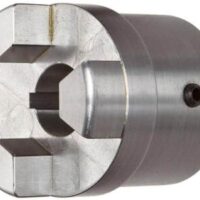
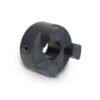
Martin MS110 1 9/16 Super Series Jaw Coupling is a Martin jaw coupling, using a replaceable elastomeric spider between two jawed hubs.
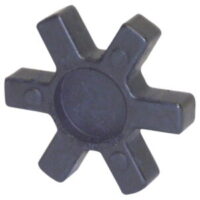
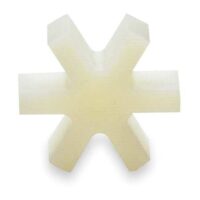
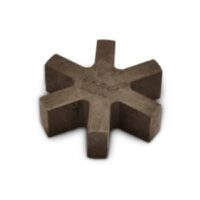
A jaw coupling connects two shaft hubs, each machined with three or more protruding jaws, with a spider insert (typically polyurethane, Hytrel, bronze, or NBR rubber) fitted between them. The spider’s lobes sit between the interlocking jaws so torque transmits from the driving hub through the spider into the driven hub. Because the spider is a separate, replaceable elastomeric part, it absorbs shock and vibration and can be swapped out for maintenance without disturbing shaft alignment or removing the hubs.
Match bore size and keyway to both the driving and driven shaft — jaw couplings are typically sold as a hub pair plus spider, and each hub can have a different bore for dissimilar shaft sizes. Check the coupling size against the manufacturer’s torque rating for your application’s peak load, and confirm the spider material suits your operating environment: polyurethane and Hytrel handle higher torque and moderate temperatures, bronze suits high-temperature or chemical exposure, NBR rubber is a lower-cost general-duty option. Note the maximum allowable misalignment (angular and parallel) and don’t rely on the coupling to correct poor shaft alignment. If sourcing a replacement spider only, confirm it matches your existing hub’s jaw size and count exactly — spiders are not universally interchangeable across brands even at the same nominal size.
Jaw couplings are one of the most common flexible coupling types in general industrial use — pumps, compressors, mixers, conveyors, fans, and light-to-medium duty machinery where moderate shock absorption and easy spider replacement are valued. They’re a standard MRO replacement item because the spider wears faster than the metal hubs and is cheap to swap.
This is a MS110 jaw coupling. If your application’s peak torque exceeds this size’s rating, step up to the next size — and if you’re replacing a worn spider rather than the full coupling, confirm the spider’s jaw count and material match your existing hubs before ordering.