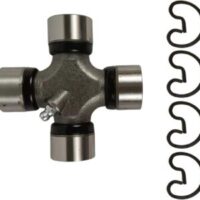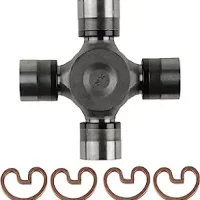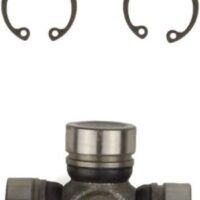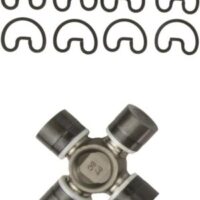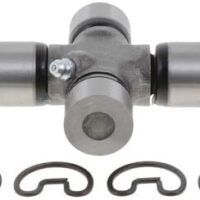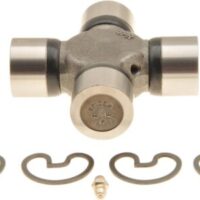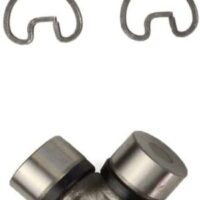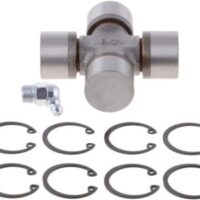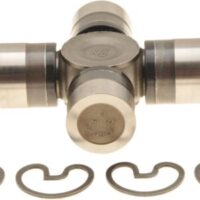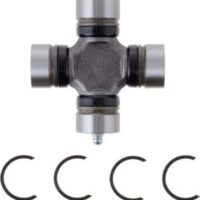
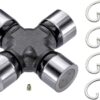
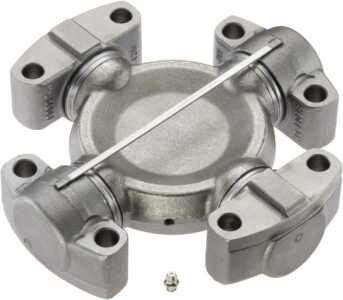
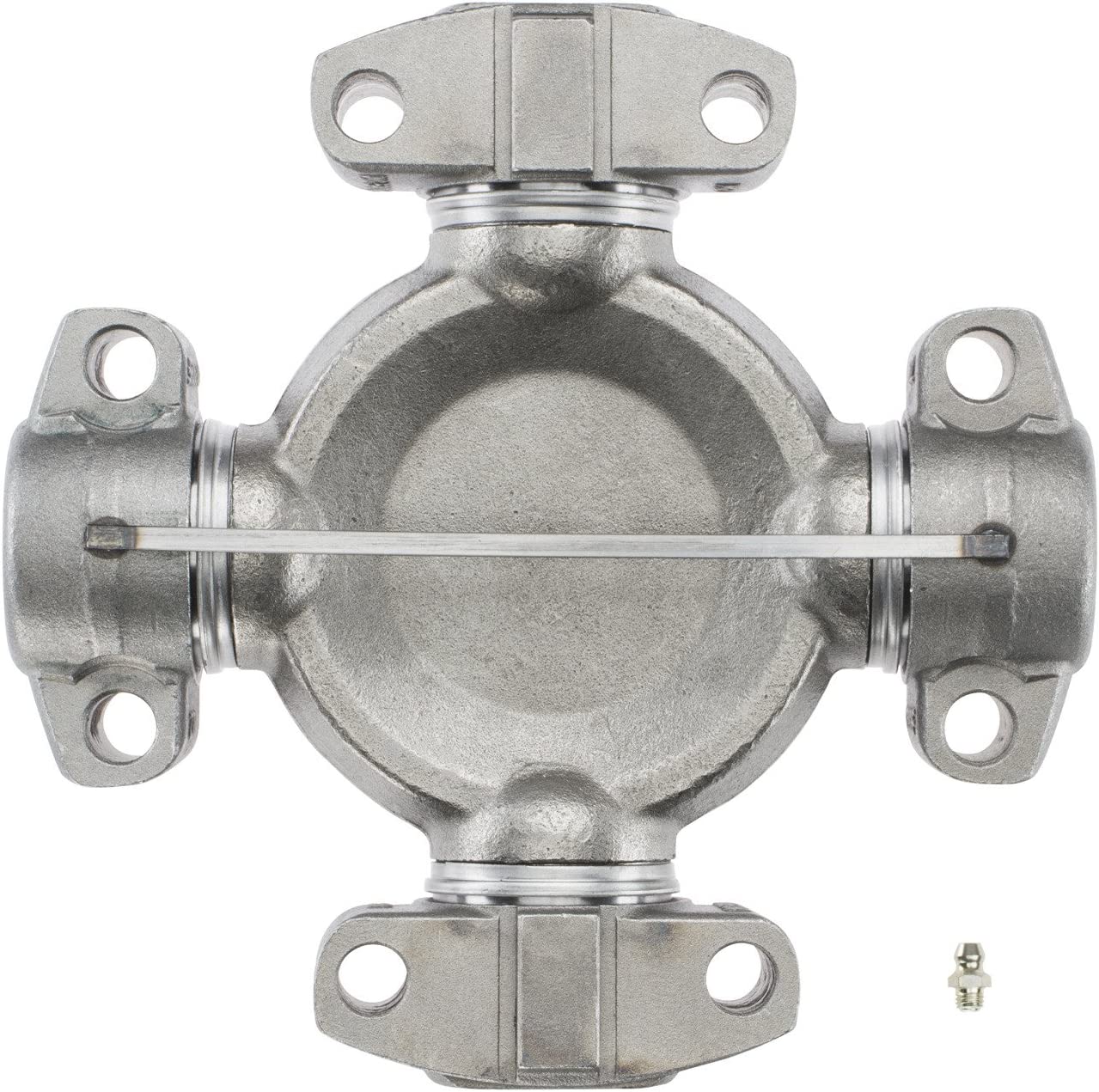
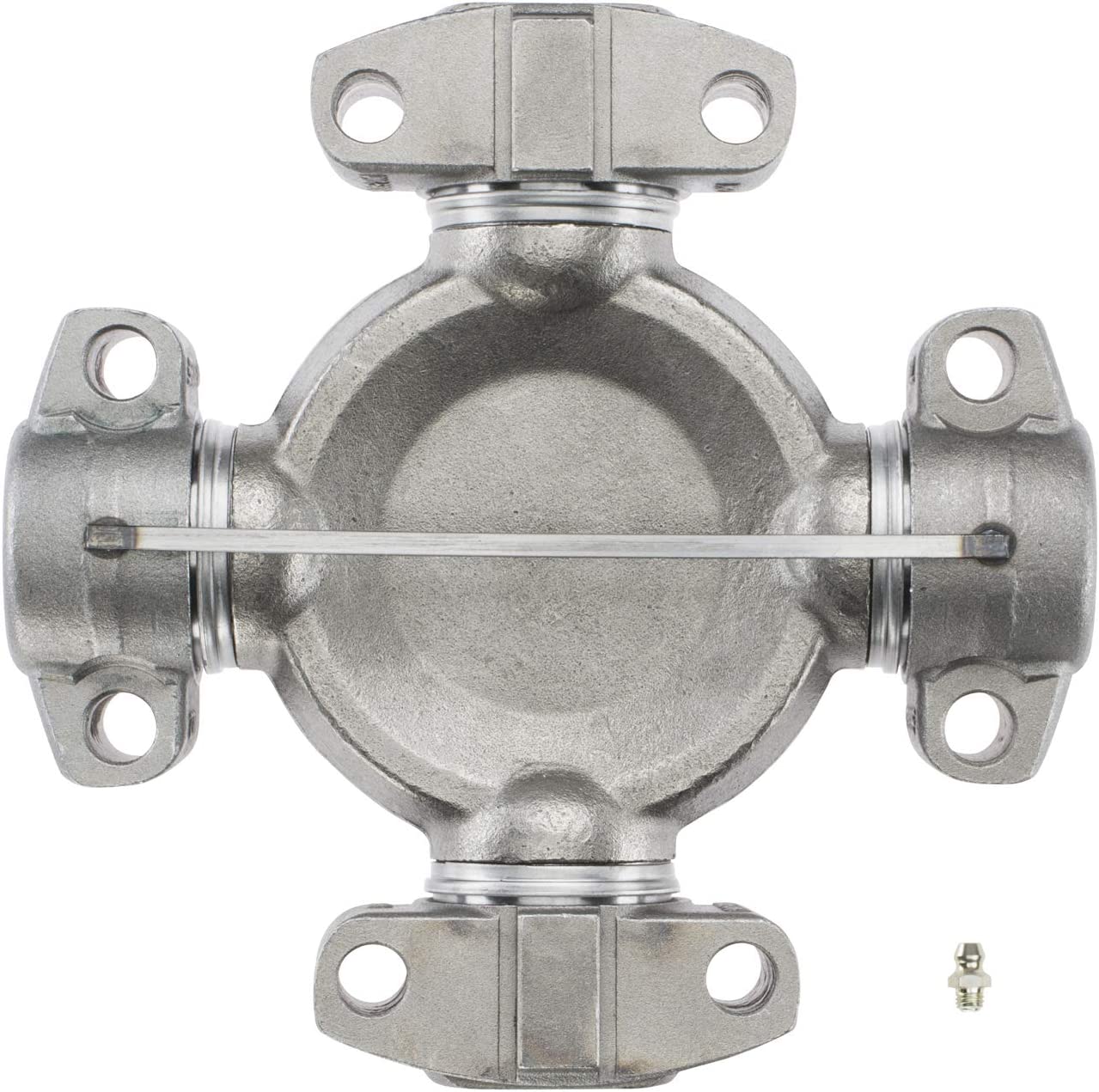
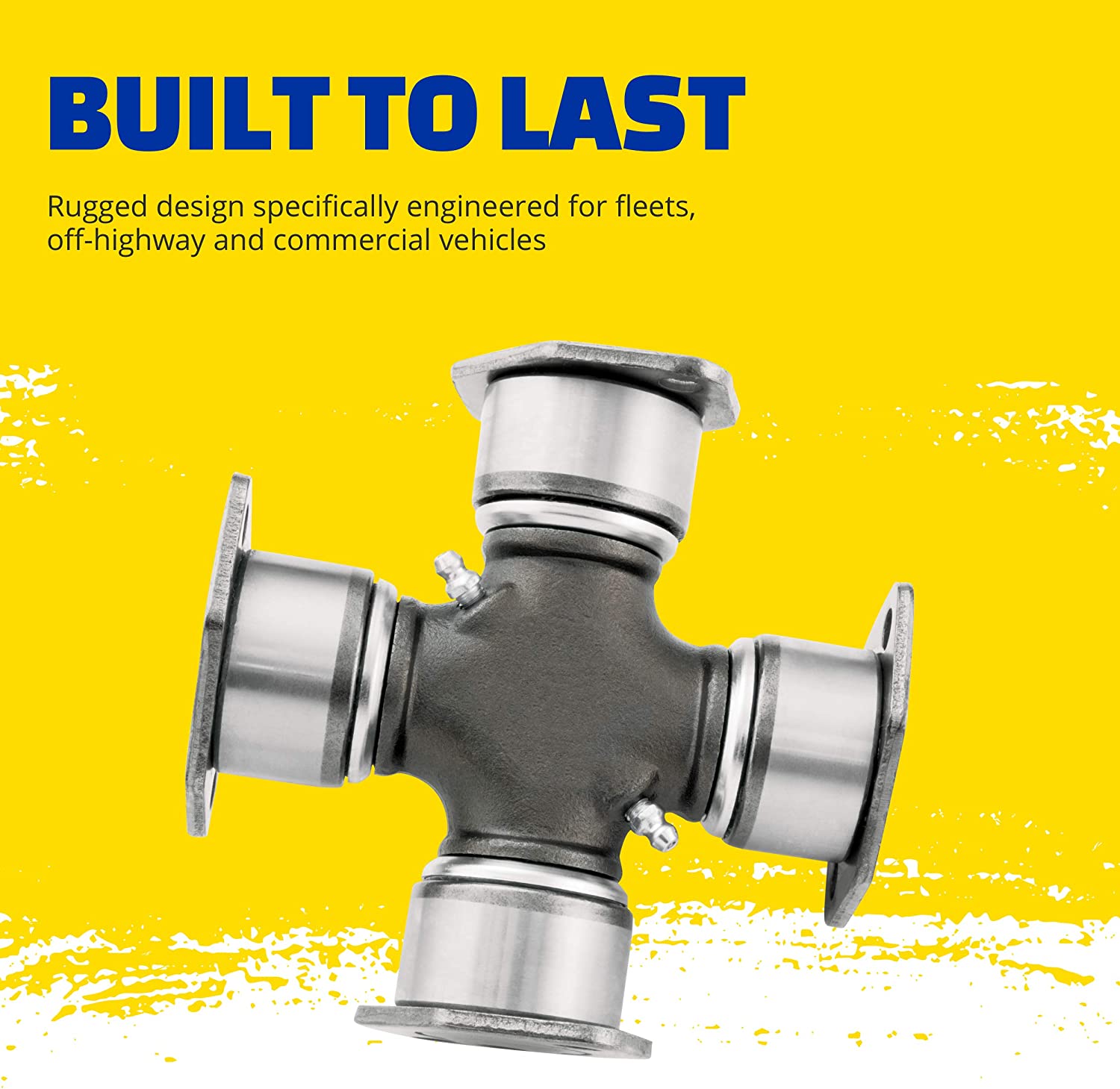
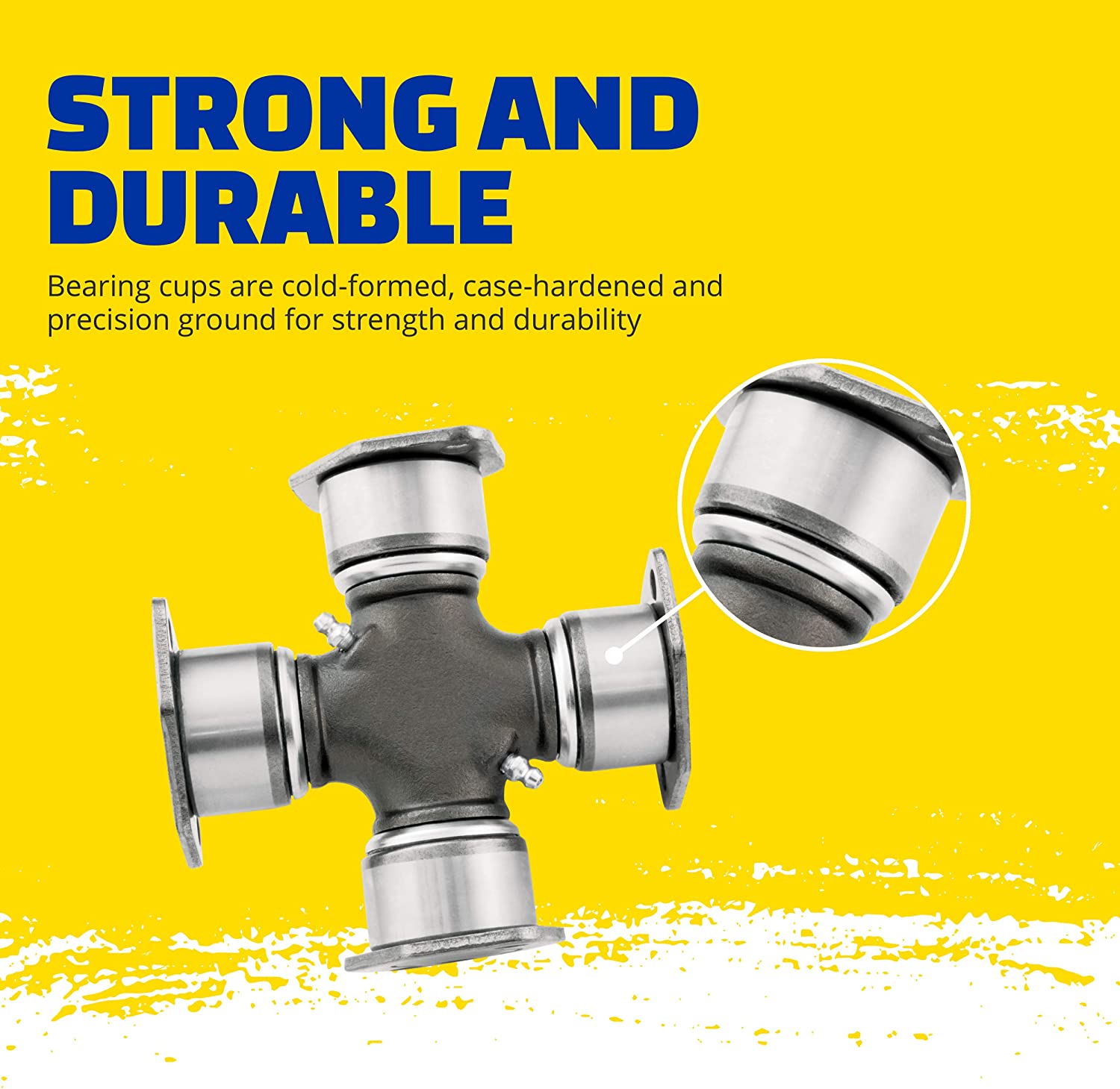
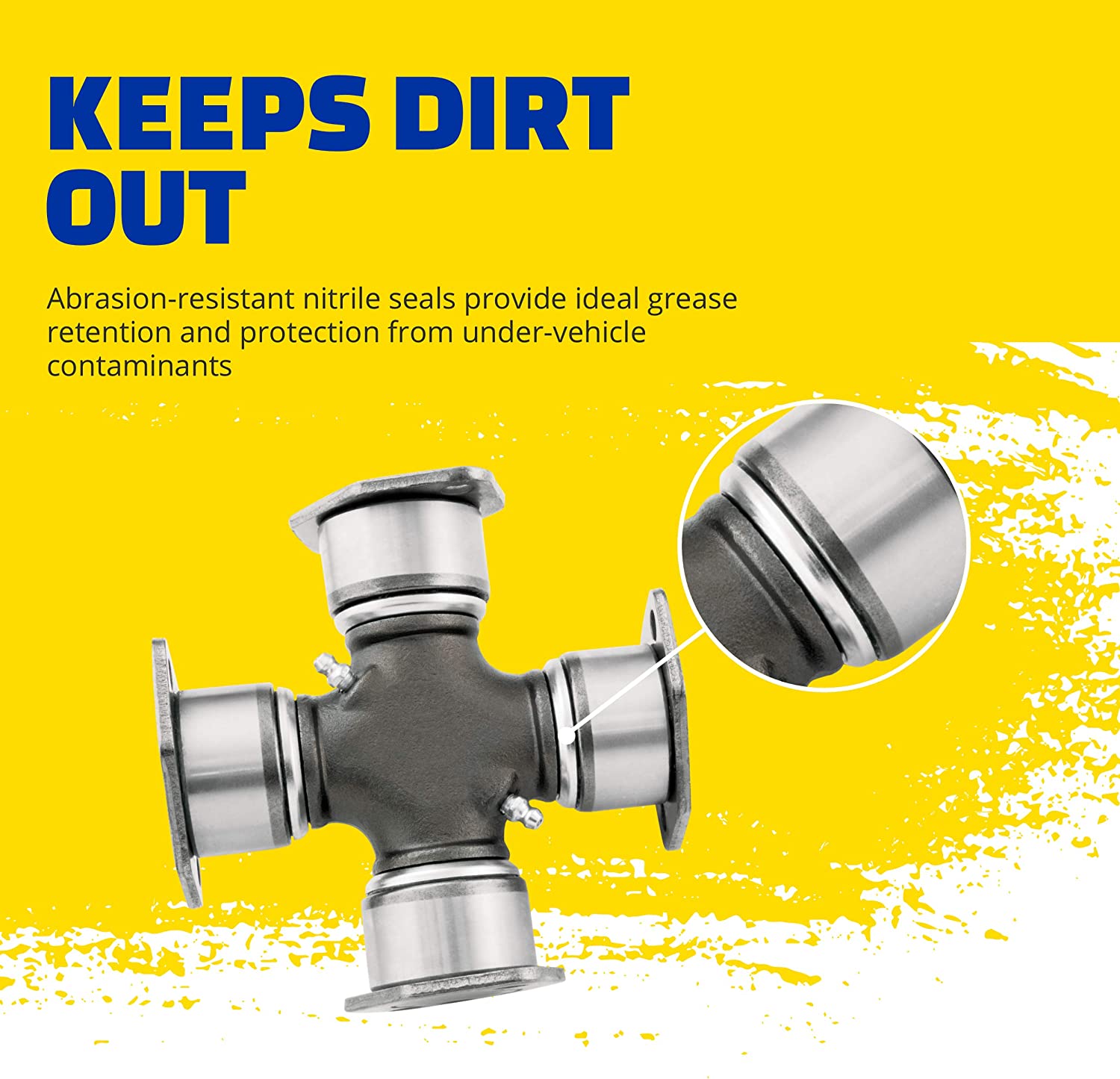
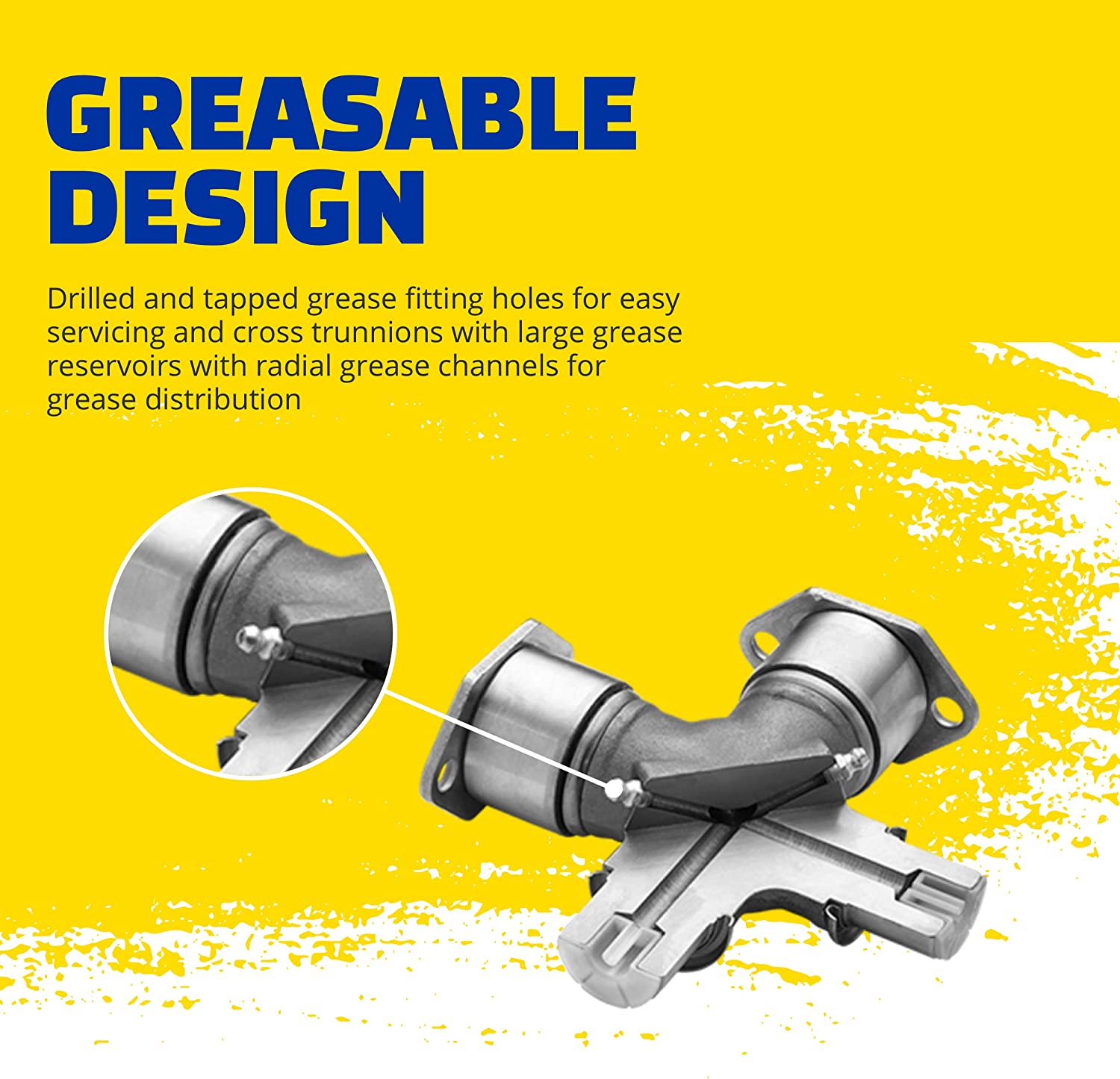
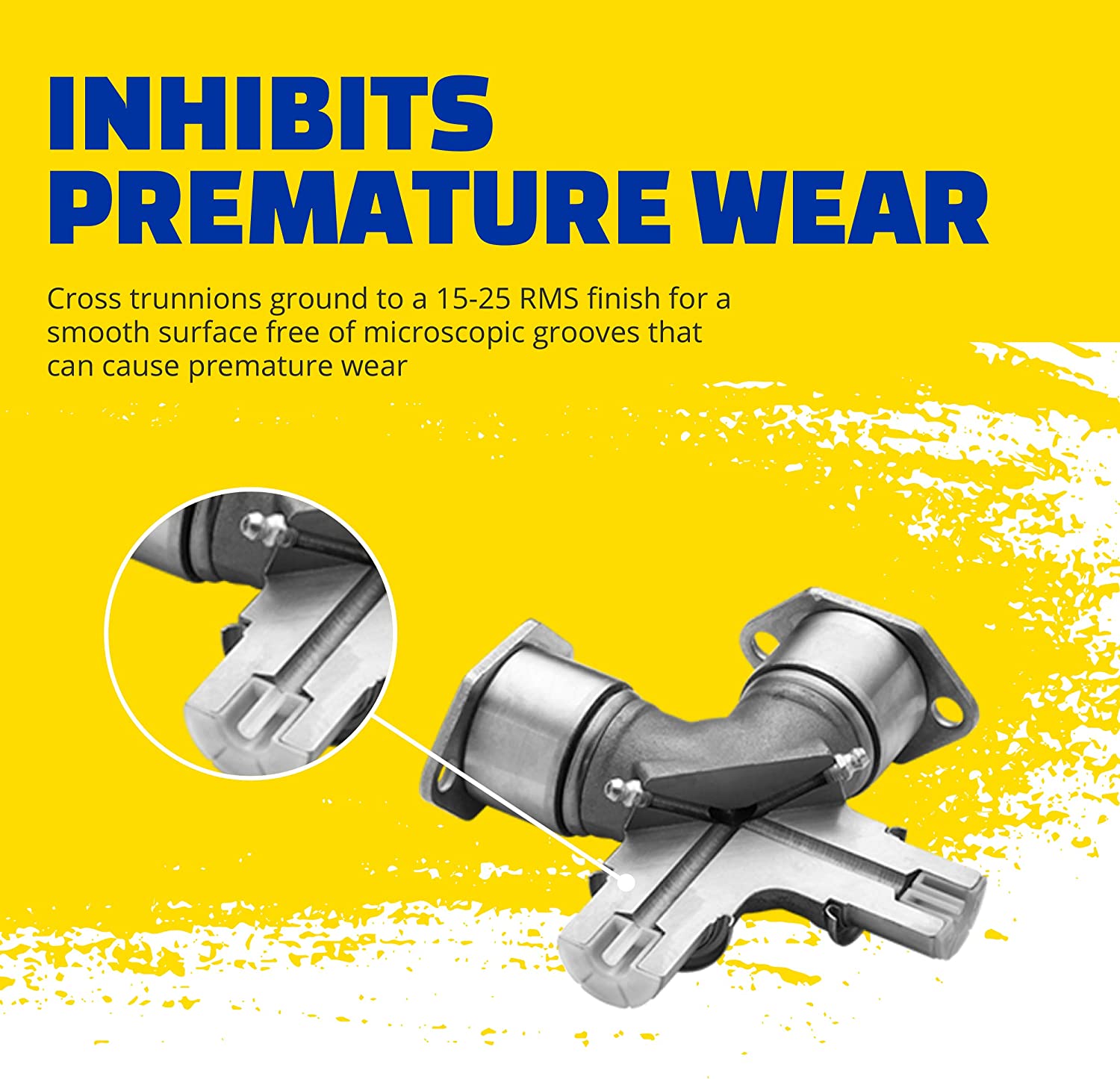


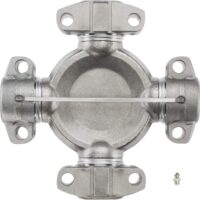
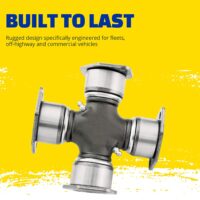
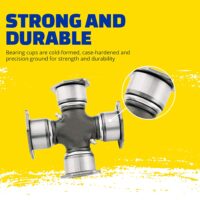

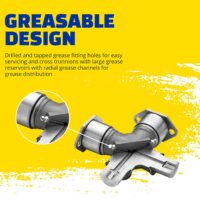

MOOG 911 U-joint is a standard-duty universal joint, sold as a direct driveline replacement part.
MOOG 911 Cross References
Brand Part Number
ACDelco 45U4200
Autopar 2309001, 69016, 59001X, G59001X, G59016X
BorgWarner 114-9044, 114-9039, 114-9040, 114-9043, 114-9038, 114-9045, 114-9050, 114-9041, 114-9016A
British Leyland 9016, 310, 9031
Caterpillar 9V7710
Chicago Rawhide 289016, 6-9016
DANA 5-9111X
FP Diesel 9V7710
GMB 1149040, 1149045, 1149038, G5-9001X, 1149043, 1149044, 69016, 1149050, 230-9001, 1149041, 1149039, 1149016A, G5-9016X, MC9030
Mcquay-Norris U9001
NEAPCO 6-9016
Neapco OE Series 6-9016, 289016
SKF 6-9016, 289016
SVL 15-9111X
Spicer DT9001, 5-9001X
A universal joint (U-joint) connects two rotating shafts that aren’t perfectly in line, allowing power to transfer around an angle. It consists of a cross-shaped center piece (the “spider” or “cross”) with four trunnions, each fitted into a bearing cap held by a yoke on either shaft end. As the shafts rotate, the cross pivots within the yokes, letting the joint flex through the operating angle while still transmitting torque. U-joints are used in pairs on most driveshafts so the speed fluctuation each single joint introduces cancels out.
Match the U-joint series number (e.g., 1310, 1330, 1350) to your driveshaft — series numbers indicate the cap diameter and overall size, and they are not interchangeable across series. Check cap-to-cap width and cap diameter against your yoke, since two joints of the same series can still differ in these dimensions across vehicle applications. Confirm whether your application needs a greasable joint (has a zerk fitting for periodic lubrication) or a non-greasable, sealed-for-life joint. If replacing on a specific vehicle or PTO shaft, match against the OEM part number or confirm fitment against year/make/model rather than by size alone — the same physical joint size is used across many different applications.
U-joints and yokes are used on vehicle driveshafts (front and rear), farm and agricultural PTO shafts, industrial line shafts, and any drivetrain where the connected shafts operate at a working angle rather than perfectly aligned. Common replacement scenarios include driveline vibration, clunking on acceleration/deceleration, or visible wear/play in the joint.
To confirm fitment, measure cap-to-cap width and cap diameter directly against your existing part, or check the OEM part number stamped on it, or match against your vehicle’s year, make, and model rather than by size alone.